


The Fastest Way to reach your financial goals is "The YFS Academy!"... Period
Introducing the YFS Academy
It doesn't matter if you don't have any tech skills or feel as though you're bad with money. Everything you need to know is provided step-by-step in this online academy.
Battle Tested, Proven and Award Winning!
The YFS Academy is for the person who wants to buy a home or investment property, save more money, invest in the stock market, improve their credit, start a business, build business credit and live life on their terms.
Here's a huge problem you face right now. It's thinking you can't do this on your own. You do not need to hire an expensive professional to reach your financial goals! But that's not the end of your problems....
What makes this even worse is the fact that you never were taught how to manage finances to reach your goal! They do not teach us this in school! Which means you're probably wasting money by paying the banks more and more in interest!
And, worst of all, you probably can't get past the idea that you have to be born with money to understand money.
All this can make trying to get the credit score, savings, and life you deserve a nightmare! But luckily for you, there's now a solution!
The YFS Academy offers step by step guidance to help you reach your financial goals, with the support you need, and you can do this in less than 5 minutes a day from any device from any location!

When You Join The YFS Academy
You Get Access To:

How To Fix Your Credit Course
The How To Fix Your Credit Course is the only program you would ever need to have the credit score you deserve. We've built this course to teach all you need to know about credit. It covers understanding your credit, building your credit, and disputing. We show you how to do everything on your own to the point you will never need to hire a credit repair company or worry about your credit again. This course was built to put our multi-7figure credit repair company out of business. This step by step course comes with over 100+ dispute letters and templates as well. We leave no stone unturned!
How To Start A Business and Dominate Business Credit
*Understanding the power of business credit
*How to build a strong business foundation
*How to structure your business so you can receive business credit
*Getting business credit from vendors
*Getting business credit cards from banks
*Getting business loans from banks
*Getting a business line of credit from banks
*Leveraging your personal credit to get business credit
....and much more

How To Invest In The Stock Market
*How to invest in your retirement plans (IRA, 401k, 403B etc..)
*How to make your children rich via the stock market
*How to invest in the stock market even when everyone else is losing money
*How to invest with as little as $25
*Teaches you everything you need to know about investing even if you never invested in the stock market before
....and much more

How To Buy A Home The Smart Way
*How to position yourself to buy the best home you can afford.
*How to get approved for a mortgage
*How to pay off your home 10 years early!
*The best type of home you should buy for growth
.....and much more

How To Buy A Car The Smart Way
*How to buy the car you want for less money
*How to get approved for a car without paying outrageous interest
*How to get the best deal for your trade-in
*Tricks of the trade: Beating the dealership at their game!
...and much more

How To Get A Pay Raise
*The best way to position yourself to get the raise you deserve this year
*How to be become an invaluable employee!
*How to get more money from doing the same things you already do
*How to handle things when your job says they can't give you a raise!
...and much more

How To Create The Perfect Budget In Order To Reach Your Goals
*How to create a budget to reach your goals regardless of your income
*Step by step procedures even if you never budgeted before
*How to budget when you get paid weekly, bi-weekly, semi-monthly or monthly
*How to budget and still treat yourself!
...and much more

How To Set Goals That You Can Achieve
*How to create savings, income, debt, and lifestyle goals that you can achieve!
*Creating S.M.A.R.T goals and implementing the system to make them come true.
*Developing the winning mindset we all need to grow.
...and much more

The 52 Week Savings Challenge
*The perfect savings challenge to assist you in saving for your next milestone!
*Weekly savings reminders
*Weekly motivation
*Weekly savings support
*We not only help you save, we motivate you and remind you every week until you reached your goals.
...and much more

Don't Just Take My Word For It
YFS ACADEMY STUDENTS ARE GETTING AMAZING RESULTS!
Here's a summary of everything you get...
This is not your typical "program". We provide you with everything you need to be successful
The YFS Academy
So you can improve your credit, pay off debt, invest in the stock market, get a raise, buy a home (or investment property), buy a car, save more and live life on your terms.... while working towards financial freedom...
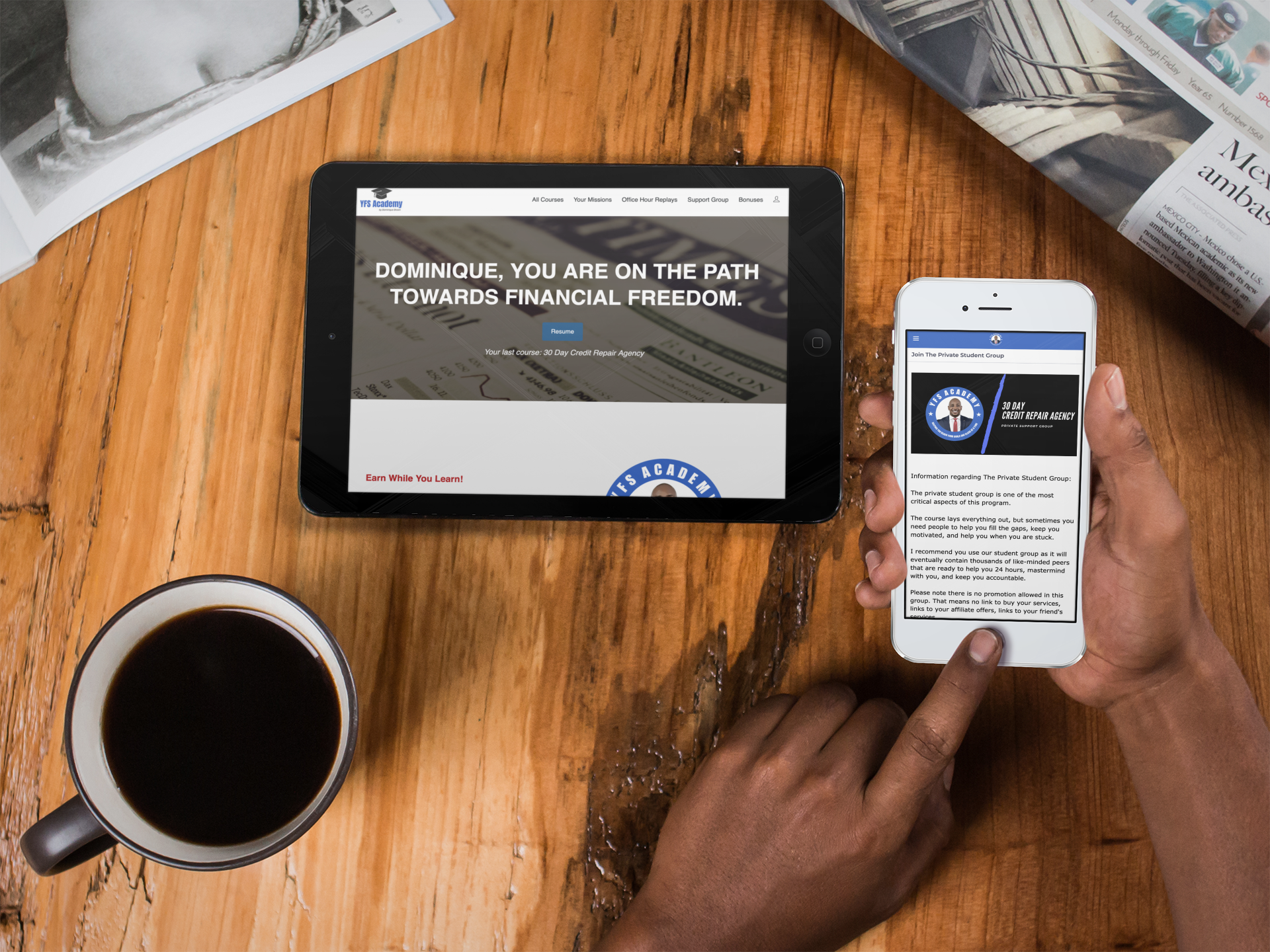

Access to the student only mastermind community!
We are all in this together, and the student group is so we can all strategize and support each other as we build our finances to reach our goals and dreams. This group offers 24/7 support for your questions and concerns.
Bi-Weekly Live Q&A
Every two weeks there is a live Q&A session to answer any and all of your questions. The Q&A sessions are recorded as well, so you can watch at your conveniece. Live Q&A, with 24/7 student group and step by step guidance you're bound to win! We want you to win and will be with you every step of the way.

But Wait! That's Not All...

Bonus #1: Multi-Million Dollar Generational Wealth Building Plan
We show you how with a game plan, focus, and small monthly investments you can set your kids, kids, kids up for financial success. We give you the exact method the ultra-rich use to create generational wealth in the future without sacrificing fun today. You can do this with as little as $25 a month!

BONUS #2: The Fastest Way To Pay Off Bills
We show you the fastest way to pay off large amounts of bills! We are talking about your student loans, credit cards, auto loans , and anything else that is holding you back from reaching your goals faster. We want to show you a sure-fire way to tackle this so you can put that additional money towards your savings, investing, and lifestyle goals.

Bonus #3: The 10 Financial Commandments For Financial Success
Out of all the financial advice we've implemented and taught over the years, we found the ten things that will nearly guarantee to put you on the right track with your finances. Seriously! When you implement just these ten principals, you will see a drastic change in how you think about finances and with your actual finances. Everybody needs this!

Don't Just Take My Word For It
YFS ACADEMY STUDENTS ARE GETTING AMAZING RESULTS!
GET 75% OFF WHILE YOU CAN!
YES! I'm ready to transform my life with this game-changing information!
Order right now and save 75% AND you'll get immediate access to the YFS Academy which you will learn step by step how to develop a plan to reach your financial goals and escape the pain of not getting what you deserve and so much more...! The YFS Academy provides you with the financial education that you should have been taught in school and will take you from where you are now to where you want to go!



Disclaimer - Privacy Policy - Terms of Service - Contact Us
Copyright 2020 - S&D Capital Holdings LLC - All Rights Reserved
This site is not a part of Facebook.com or Facebook Inc. Additionally, The YourFinancesSimplified Academy and S&D Capital Holdings LLC are not endorsed by Facebook, Inc. in any way. Facebook is a trademark of Facebook, Inc.